
Concrete Paver Patio
About This Project
This DIY project outlines the steps to pave a medium-sized (10-30 square meters) outdoor area for use as a patio/seating area. The current ground is uneven and covered with gravel. The paving material will be concrete pavers. No underground utilities are present in the area.
Steps
Mark the Patio Area
Using a tape measure and spray paint or stakes and string, mark the exact perimeter of your planned patio area on the ground. Double-check the measurements to ensure they are accurate and account for the size of the concrete pavers you intend to use. This step is crucial for defining the scope of your project and guiding subsequent excavation.
Watch: Step 1 videoExcavate the Area
Using a shovel or a power auger (for larger areas or tougher soil), remove the existing gravel and soil within the marked perimeter. The excavation depth should be sufficient to accommodate the thickness of your concrete pavers, plus approximately 4-6 inches for the compacted gravel base, and about 1 inch for the leveling sand. Ensure the bottom of the excavated area is relatively level.
Watch: Step 2 video
Compact the Base
Once the excavation is complete, use a hand tamper or a plate compactor to thoroughly compact the soil at the bottom of the excavated area. This step is vital for creating a stable and level base that will prevent settling and shifting of the pavers over time. Ensure the entire surface is evenly compacted.
Watch: Step 3 video
Install Gravel Base
Fill the excavated area with approximately 4-6 inches of crushed gravel (e.g., 3/4-inch clean crushed stone). Spread the gravel evenly using a rake. After spreading, compact the gravel layer thoroughly using a plate compactor. Repeat this process in 2-inch lifts if necessary to achieve the desired depth and a firmly compacted base.
Watch: Step 4 video
Install Edge Restraints
Position the edge restraints along the inside perimeter of the excavated area, ensuring they are flush with the planned finished paver height. Secure the restraints to the compacted gravel base using the provided spikes or stakes, driving them deep enough to hold the restraints firmly in place. These restraints will prevent pavers from shifting outwards.
Watch: Step 5 video
Add and Level Sand Bed
Pour a 1-inch layer of coarse sand (paver sand or coarse masonry sand) over the compacted gravel base. Use screed rails (e.g., metal pipes or lumber) set at the desired finished height and a screed board to level the sand. Drag the screed board across the rails to create a smooth, level surface. Do not walk on or compact the sand after screeding.
Watch: Step 6 video
Lay the Pavers
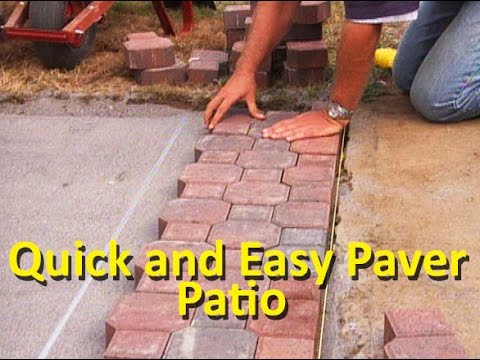
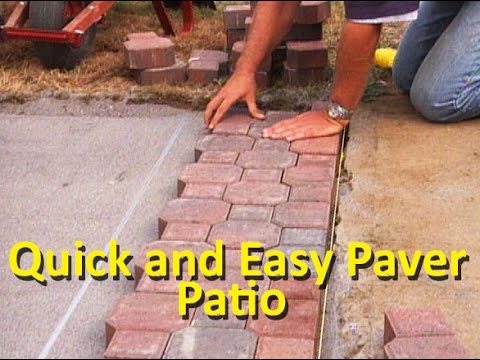
Starting from one corner or a straight edge (like the house wall or edge restraint), lay the concrete pavers onto the sand bed. Place each paver gently without shifting it. Maintain a consistent small gap (typically 1/8 to 1/4 inch) between pavers using paver spacers if necessary. Work your way across the patio, ensuring each paver is level and aligned with its neighbors. Cut pavers as needed for edges or obstacles.
Watch: Step 7 video
Cut and Fit Edge Pavers
Measure and cut pavers precisely to fill any remaining gaps along the edges of the patio area. Use a masonry saw or an angle grinder with a diamond blade for accurate cuts. Fit the cut pavers snugly against the edge restraints, ensuring they are level with the surrounding pavers. This step provides a clean, finished look and locks the patio structure.
Watch: Step 8 video
Sweep Joint Sand
Spread a layer of polymeric sand over the entire paver surface. Use a soft-bristled broom to sweep the sand, ensuring it fills all the joints between the pavers completely. Work in sections, sweeping excess sand off the paver surface as you go. Once the joints are filled, lightly mist the patio with water according to the manufacturer's instructions to activate the sand's binding properties.
Watch: Step 9 videoCompact the Pavers
After the polymeric sand has set (follow manufacturer's cure time), use a plate compactor equipped with a protective rubber mat or carpet scrap to vibrate the pavers. Make several passes over the entire patio surface. This process settles the pavers into the sand bed, ensures they are uniformly level, and further helps to embed the polymeric sand into the joints, creating a solid surface.
Watch: Step 10 video